Booking choice: The ice cave tour from Jökulsárlón, from $169 per person. Check dates Tour details
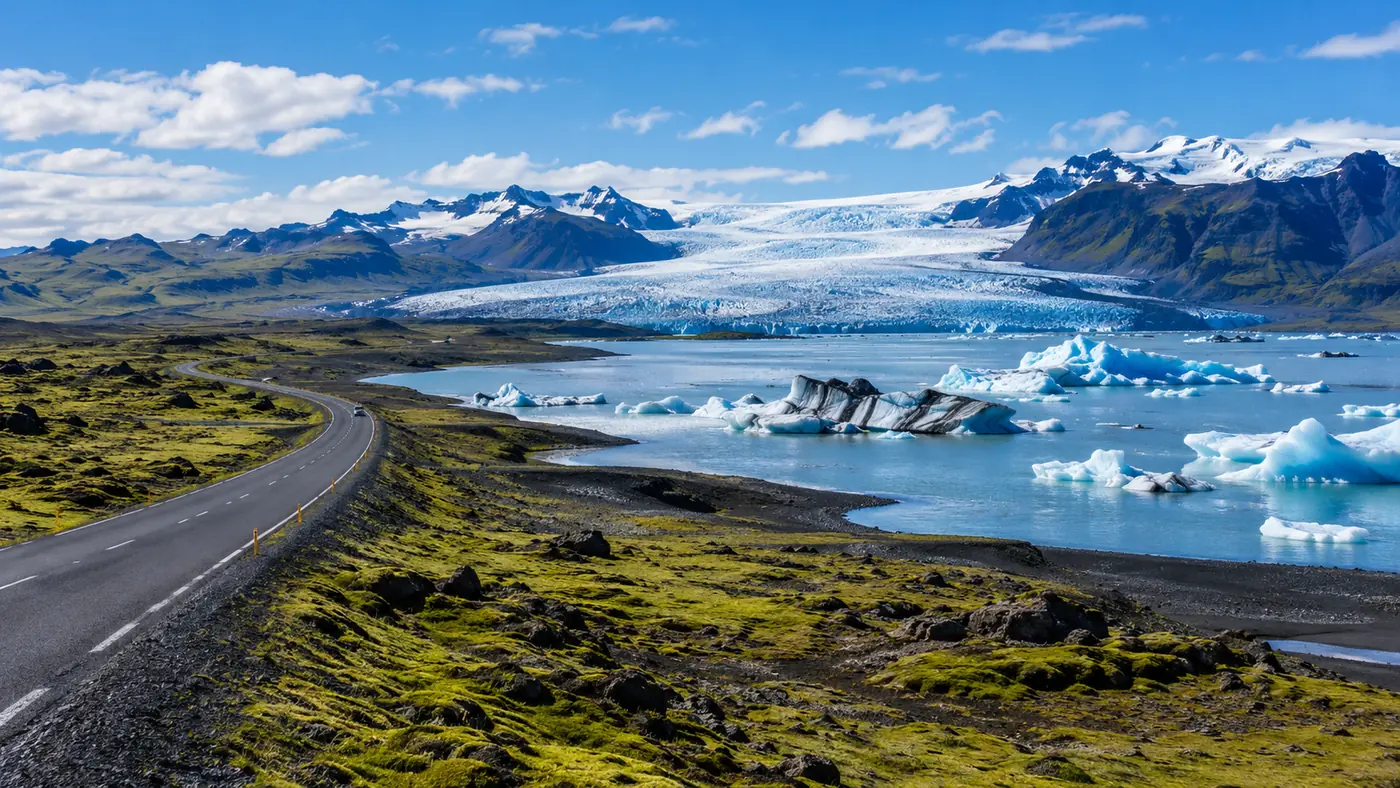
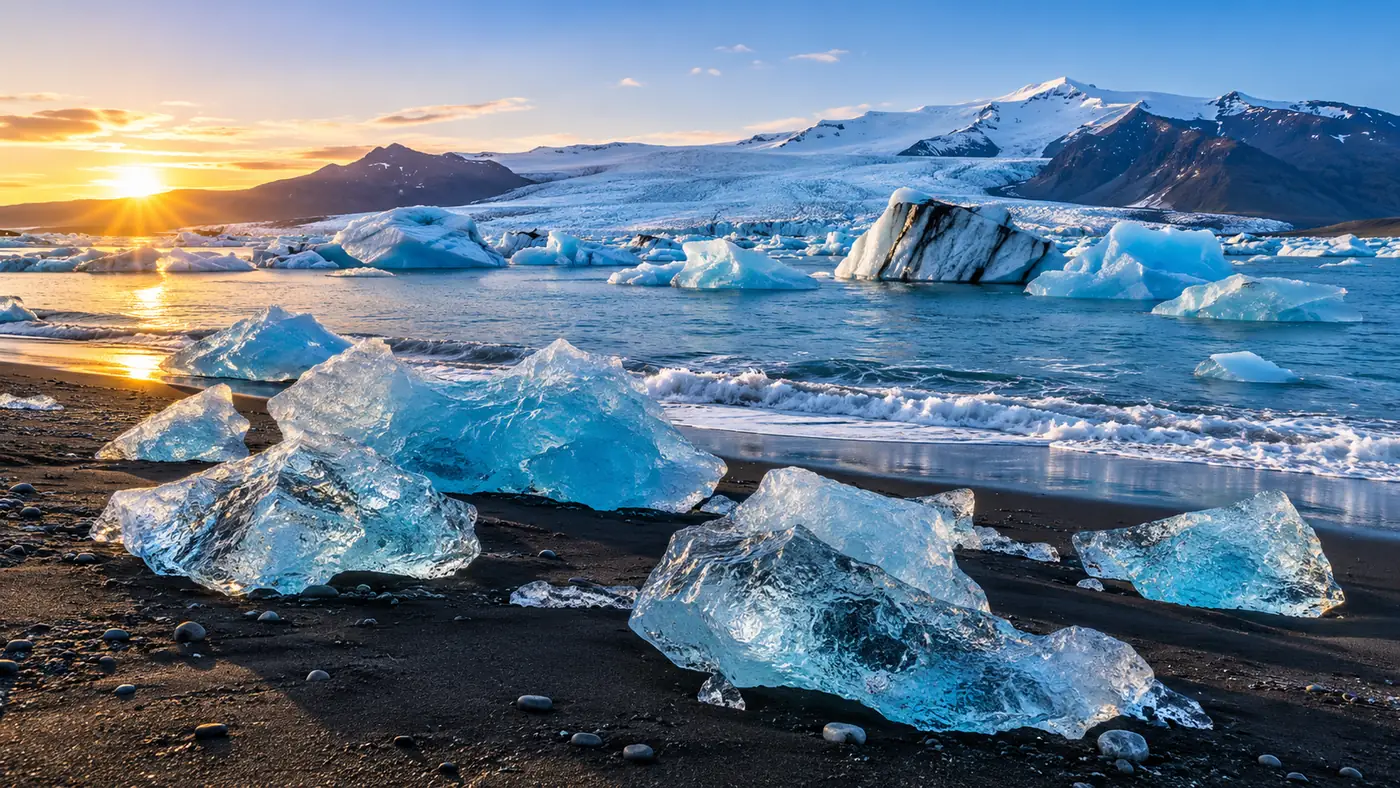
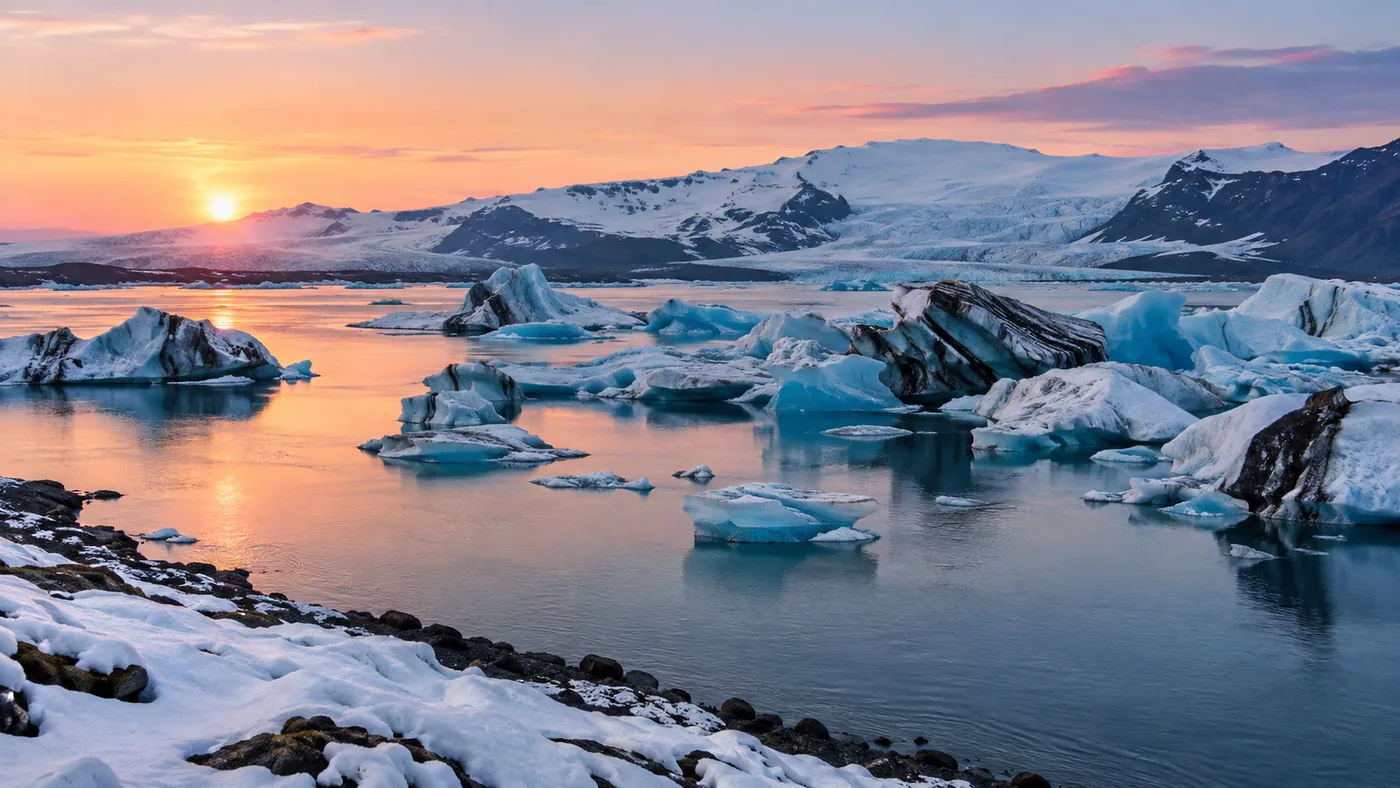
Winter changes the lagoon more than it closes it. Route 1 runs past all year and the national park's rangers are on duty at Jökulsárlón, Diamond Beach and Fjallsárlón every day of the year. The light is low and soft for most of the short day, and on clear nights the sky can do the rest.
What changes is the list of things to do. This guide covers when the boats stop, what replaces them, how the ice cave tours work and where the caves really are, the northern lights, how much daylight you get and how to handle the winter drive.
The quick answer
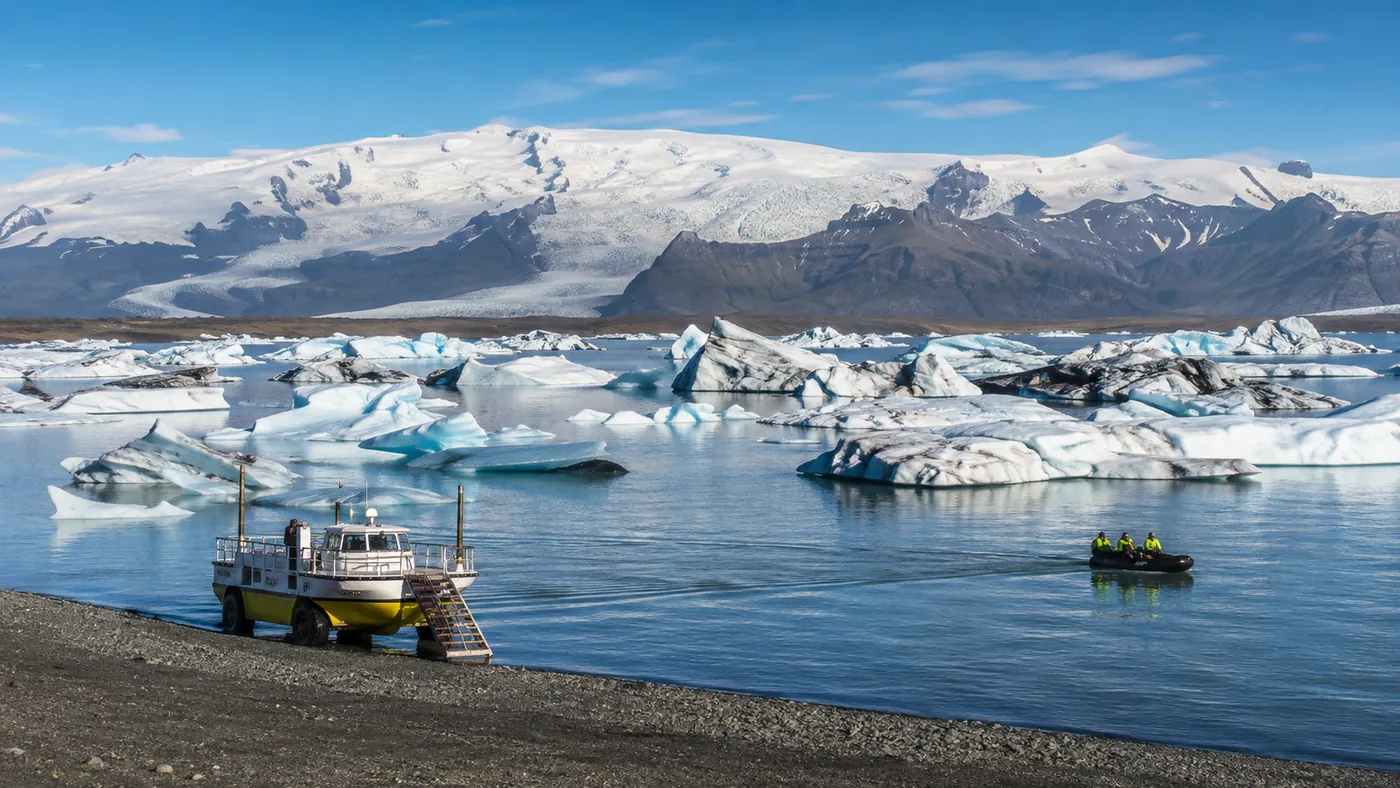
The lagoon, Diamond Beach and the café stay open in winter. The operator's amphibian boats run until about mid-November and the Zodiacs until the end of October (2026 schedule, weather and ice permitting). From then on, the winter plan is an ice cave tour: it meets at the Jökulsárlón car park and drives by 4x4 to caves in Breiðamerkurjökull, roughly October to March or April. There is no ice cave in the lagoon itself.
Can you visit Jökulsárlón in winter?
Yes. The lagoon and Diamond Beach are open all year, Route 1 runs past them, and rangers are on site every day.
Vatnajökull National Park says the region is "accessible year-round". The car parks and the operator's café stay open through the winter; the café's footer hours are 9am to 5pm from November to February, and it closes 24 to 26 December and 31 December to 2 January. Parking is 1,110 ISK per car (2026), as in summer.
The lagoon itself looks different in winter: snow on the moraines, a low sun on the icebergs for much of the day, and ice on the paths. Guide to Iceland cites a study that measured the most floating ice in February and March. Wear boots with grip and carry light spikes; the ground is rocky and can be icy.
The short walks still work. Trail B1 is a 1.2 km loop from the main car park up the ridge Helguhóll, with a view over the lagoon to the glacier, and trail B2 runs from the beach under the bridge to the lagoon. The main car park was resurfaced in early October 2026 and is open again.
Do the Jökulsárlón boat tours run in winter?
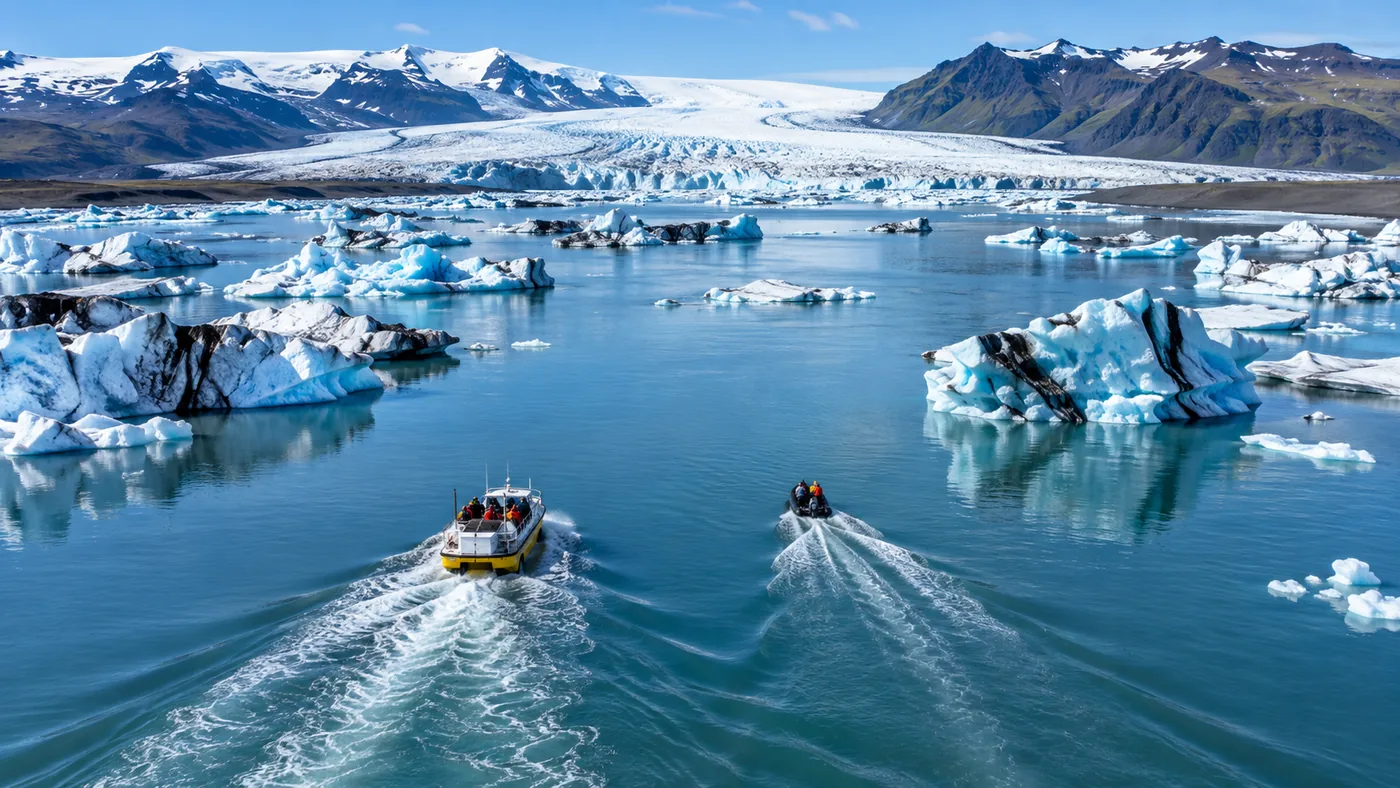
No. The operator runs the amphibian boats from May to about mid-November and the Zodiacs from May to the end of October (2026), weather and ice permitting. There are no boats on Jökulsárlón in mid-winter.
Jökulsárlón ehf's own hours box shows amphibian tours from 10am to 5pm from October to 15 November, and it says the Zodiac may keep going past the end of October "if conditions allow". Either boat can be cancelled on the day for wind or ice, with a full refund from the operator. If a ride on the lagoon is the point of your trip, come between May and October; our boat season post tracks the end of this year's season.
Water and ice do not stop entirely in winter, though. The nearby Fjallsárlón operator lists its iceberg boat tour from April to November and its ice floating all year:
| Activity | Where | Season (2026) |
|---|---|---|
| Amphibian boat | Jökulsárlón | May to about mid-November |
| Zodiac boat | Jökulsárlón | May to the end of October |
| Iceberg boat tour (Zodiac) | Fjallsárlón | April to November |
| Ice floating in a thermal suit | Fjallsárlón | All year, ages 15 to 75 |
| Ice cave or blue ice tour | Breiðamerkurjökull, from the Jökulsárlón car park | Winter, roughly October to March or April |
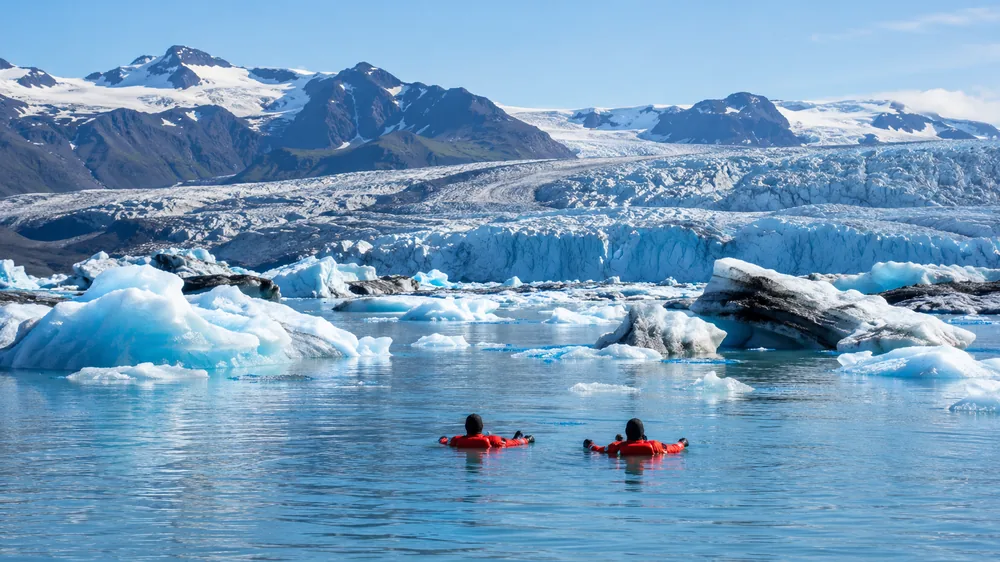
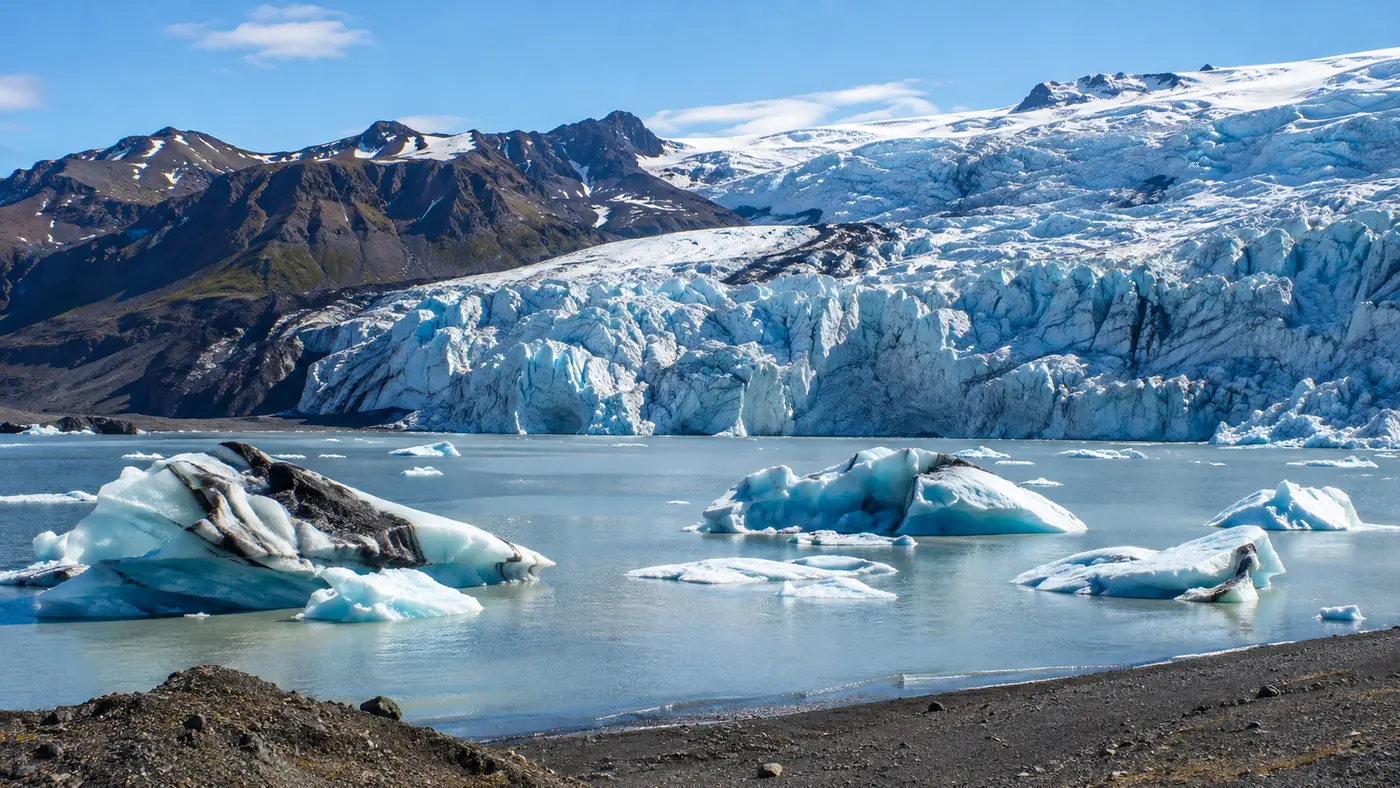
Float among the icebergs of Fjallsárlón in a thermal immersion suit, in any month, then warm up with a hot drink.
Explore the Fjallsárlón ice floating tour Tour detailsIs there an ice cave in Jökulsárlón?
No. The caves are in Breiðamerkurjökull, the outlet glacier above the lagoon. Tours meet at the Jökulsárlón car park and drive 20 to 35 minutes by 4x4 to reach them.
The confusion is understandable: the tours are sold as "Jökulsárlón ice cave" because that is where you meet. The caves themselves form in the glacier, cut by meltwater, and change shape every season. The national park's rangers on Breiðamerkursandur are responsible for the ice caves in Breiðamerkurjökull, and the tours run under park contracts.
- Guided only. Nobody walks into a cave on their own. Operators pick the safest cave of the day and may show a blue ice feature instead.
- Winter only. Roughly October to March or April, conditions permitting. Reviews show tours running from 2 October 2026, and the Fjallsárlón operator says the natural cave season typically runs from mid-October to mid-April.
- Ages vary by tour, from 5 on a family tour to 14 on the longer ones; the ice cave tour below takes ages 10 and up.
- Weather rules. Tours can be changed or cancelled if the park considers conditions unsafe.
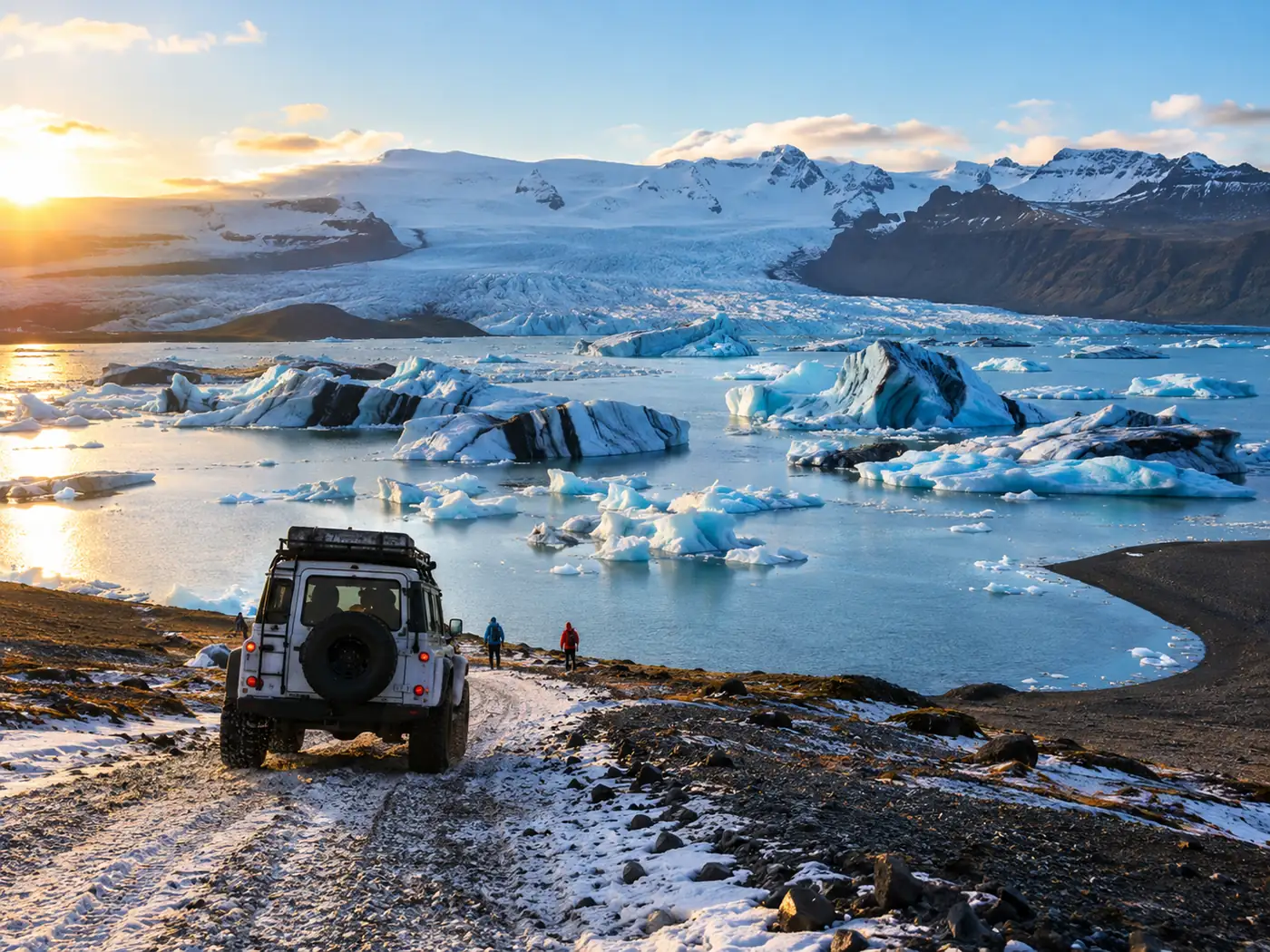
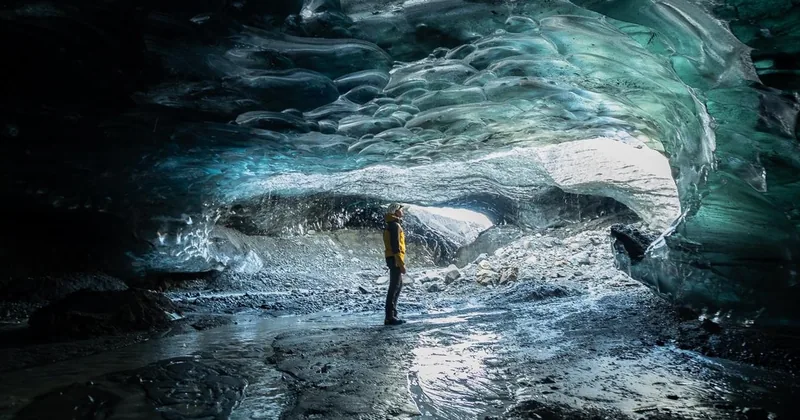
Meet at the Jökulsárlón car park, ride a modified 4x4 to Breiðamerkurjökull and walk into an ice cave or blue ice feature with a glacier guide.
Explore the ice cave tour from Jökulsárlón Tour detailsWhat is an ice cave tour from Jökulsárlón like?
About 3 hours: a 4x4 ride to the glacier, a guided walk of 1 to 5.5 km depending on where the cave is, then the blue ice. No experience needed, a normal level of fitness is.
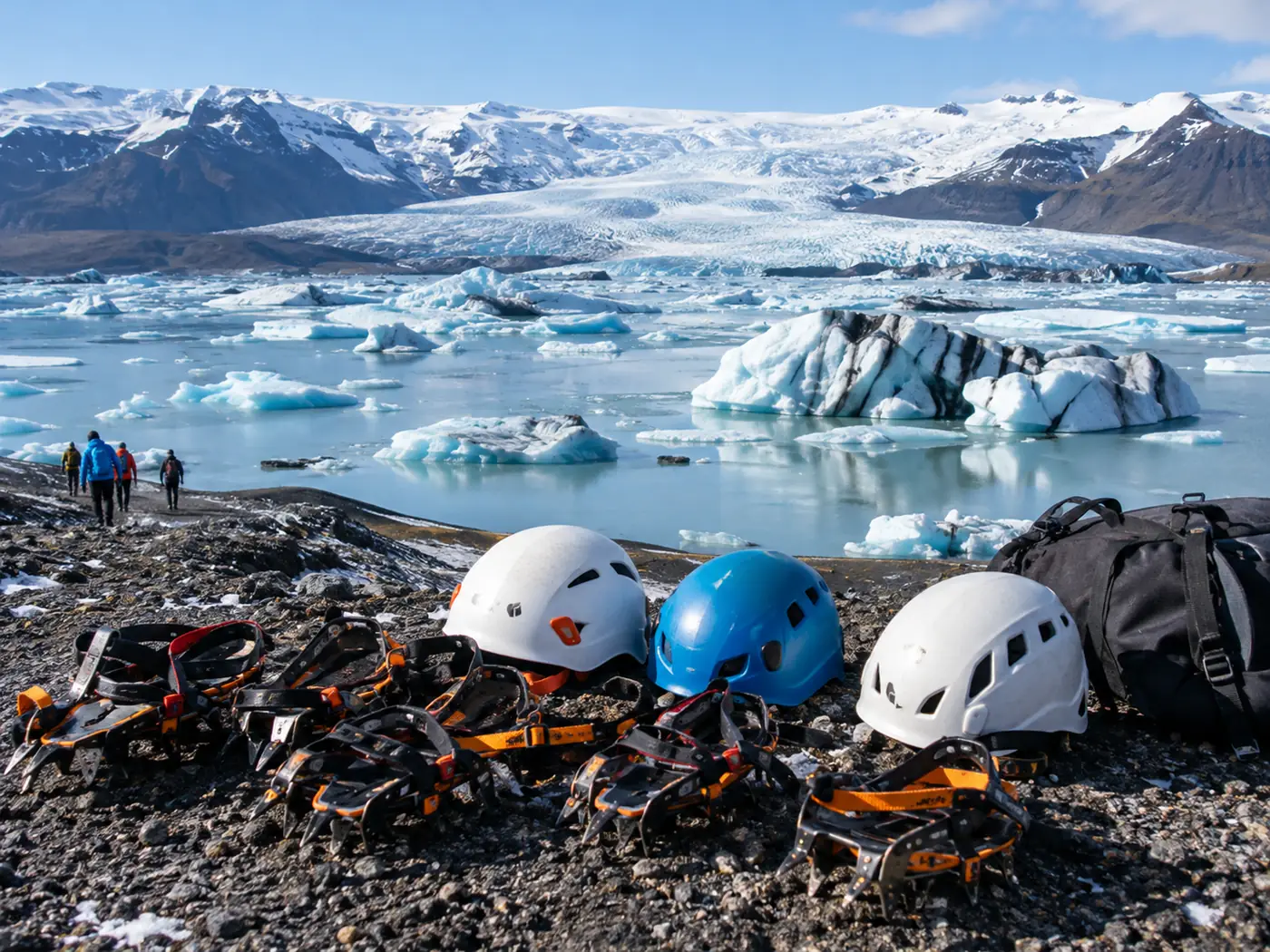
On the Original Ice Cave Tour (Local Guide, from $169, 4.5 out of 5 from more than 1,200 reviews), you meet at the Jökulsárlón car park, board a modified 4x4 and get a helmet and spikes. The operator rates it easy to moderate and asks for warm layers, a waterproof shell and over-the-ankle hiking boots (rentals available). The walk length depends on where this season's cave or blue ice feature is. Hotel pickup and food are not included, and the minimum age is 10.
Recent guests write about the colour more than anything. Lisa, in October: "The blue colors in the cave walls made spectacular photographs." Melanie: "it is not a difficult thing to do, just a little windy."
The rules changed after an ice collapse during a summer ice cave tour at Breiðamerkurjökull in August 2024 killed one visitor. Since 2025 the caves are closed from May to September, groups have 8 to 16 guests per guide, and operators run daily risk checks and share them, Iceland Review and the Reykjavík Grapevine reported. Our ice cave season post has this winter's picture.
Can you see the northern lights at Jökulsárlón?
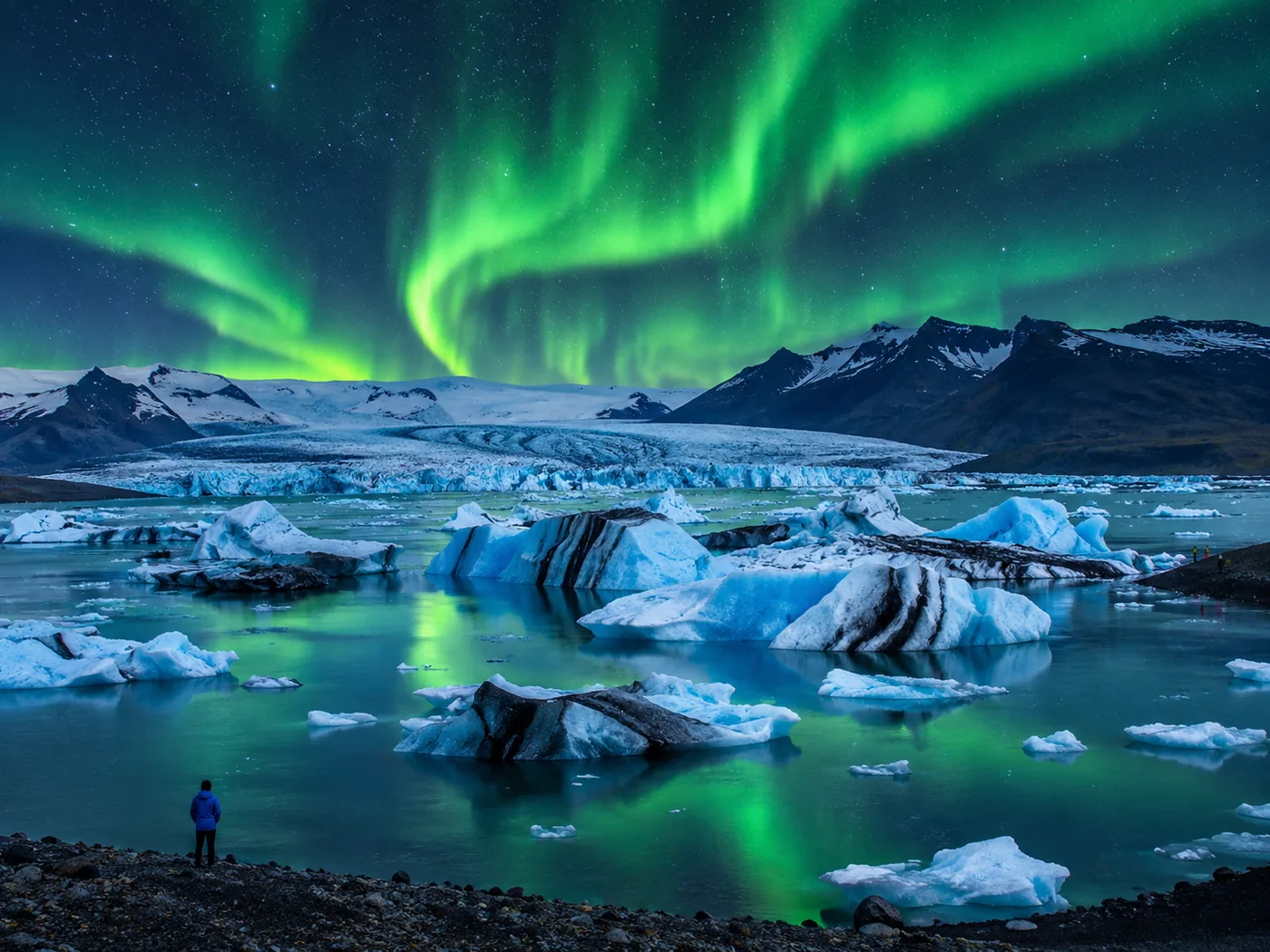
Yes, on a dark night with a clear sky and some solar activity, but nobody can promise them. Check the Icelandic Met Office's aurora forecast the same day.
The Met Office (vedur.is) puts it simply: the aurora "requires dark and partly clear skies". Its forecast page shows a cloud cover map of Iceland and an activity forecast on a scale of 0 to 9. Perlan, the nature museum in Reykjavík, gives the viewing season as late August to early April; in June and July it never gets dark enough.
You cannot camp or stay overnight at the lagoon, so a night of aurora watching means a hotel nearby or a lucky ride home. Day tours from Reykjavík run in winter and drive back in the dark, and the reviews show what can happen. Francoise, in October: "The day ended with a spectacular display of northern lights on the way back." LIN, on the day trip with the boat option in February: "We were also lucky enough to see the Northern Lights in the evening, which made the experience truly amazing." Lucky is the word: plan the trip for the ice, and treat the aurora as a bonus.
A day from Reykjavík past Seljalandsfoss and Skógafoss to the lagoon and Diamond Beach, with a guide at the wheel on winter roads.
Check dates for the day trip with the boat optionHow many hours of daylight are there at Jökulsárlón in winter?
Very few around Christmas: about four hours of daylight at the winter solstice in Reykjavík, and a little more in the south. By March the days are long again.
Short days shape everything. A day tour from Reykjavík in December spends most of its daylight on the road and arrives at the lagoon in the low midday light; driving yourself, plan to cover the long empty stretches in daylight and save the dark for the last hour.
The upside is the colour. With the sun low all day, the lagoon and Diamond Beach get the long golden and pink light that photographers wait for in summer. For the beach in winter, see our Diamond Beach guide.
Is it safe to drive to Jökulsárlón in winter?
It can be, with care and the right checks. Look at road.is, vedur.is and safetravel.is the morning you drive, and be ready to change plans.
The south coast is exposed, and wind is the main problem: on 29 October 2026 Safetravel warned of gusts up to 30 m/s between Reykjavík and Vík and told drivers to adjust their travel plans. Conditions can change fast outside summer, the national park warns.
- Before you go: weather at vedur.is, roads at road.is, alerts and a travel plan at safetravel.is.
- On the road: slow down for one-lane bridges and for reindeer, which stay on the eastern side of Breiðamerkursandur in winter and can run across the road.
- Fuel: there is no petrol station at the lagoon, Guide to Iceland notes; fill up on the way.
- In an emergency: call 112.
If the idea of a 370 km winter drive puts you off, let a professional drive. The day trip with the boat option has reviews from February, and our Reykjavík guide compares the options.
What can you do at Jökulsárlón in winter?
Walk the shore and Diamond Beach, take an ice cave tour, float in Fjallsárlón, hike on a glacier at Skaftafell and look for seals. Seals are often around in winter, but never guaranteed.
- The lagoon and the beach: free to walk, open all year, and quieter light than in summer.
- An ice cave: the ice cave tour from the car park, about 3 hours, from age 10.
- Ice floating: float among the ice at Fjallsárlón in a thermal suit, 10 km west, ages 15 to 75, swimmers only.
- A glacier hike: the Skaftafell blue ice hike on Falljökull, 4 hours from the base camp about 45 minutes west, from age 8; reviews show it running through late October.
- Seals: the operator says they are frequently seen on the icebergs or in the water, and Wikipedia notes they gather in larger numbers at the lagoon mouth in winter.
- The café: lobster soup, hot drinks and somewhere warm, until at least 5pm in winter.
Pack for wind more than for cold: a windproof and waterproof outer layer, a warm hat, gloves, and boots you can walk on ice in.
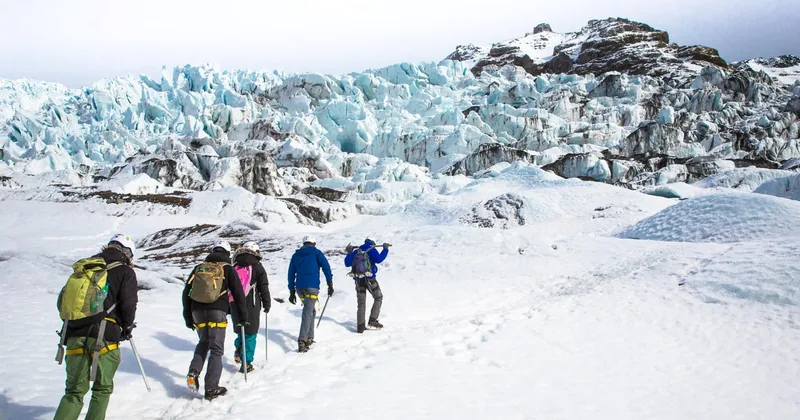
Crampons, axe, helmet and harness on blue ice on Falljökull, with a certified guide, from the Skaftafell base camp.
Explore the Skaftafell blue ice hike Tour detailsFrequently asked questions
Do the boats run at Jökulsárlón in winter?
No. The amphibian boats run from May to about mid-November and the Zodiacs from May to the end of October (2026), weather and ice permitting.
Is there an ice cave in Jökulsárlón?
No. The ice caves are in Breiðamerkurjökull, the glacier above the lagoon. Guided tours meet at the Jökulsárlón car park in winter and drive there by 4x4.
When is ice cave season at Jökulsárlón?
Roughly October to March or April, conditions permitting. The caves are closed from May to September.
Can you see the northern lights at Jökulsárlón?
Yes, on dark nights with clear skies and enough activity, roughly from late August to early April. They are never guaranteed; check the forecast on vedur.is.
Ready to book
Choose your tour
Free cancellation up to 24 hours before on every option. Prices are from-prices in USD and move with the season.
Original Ice Cave Tour from Jökulsárlón
The winter plan when the boats are off